Hacking Pop Interpretation

I was always wondering: how do they do it? The pro piano players who take pop songs and create wonderful, authentic instrumental versions of them that sound awesome on their own without vocals. I remember jealously listening to those pieces and thinking β€” damn, I’ll never be able to do this β€” and then going back to my block triads with octave bass. It’s okay, son, don’t go too hard on yourselfβ€”

Well guess what! I won’t say I’ve mastered it, but I hacked it, and now it’s just a question of practice hours, baby. I call this exercise “Pop Jam” β€” the idea is dead simple:

  • Find chords on the Interwebs (or in the Real Book if you’re into jazz standards)
  • Play through the whole chart once with block chords and simplest bass on Earth
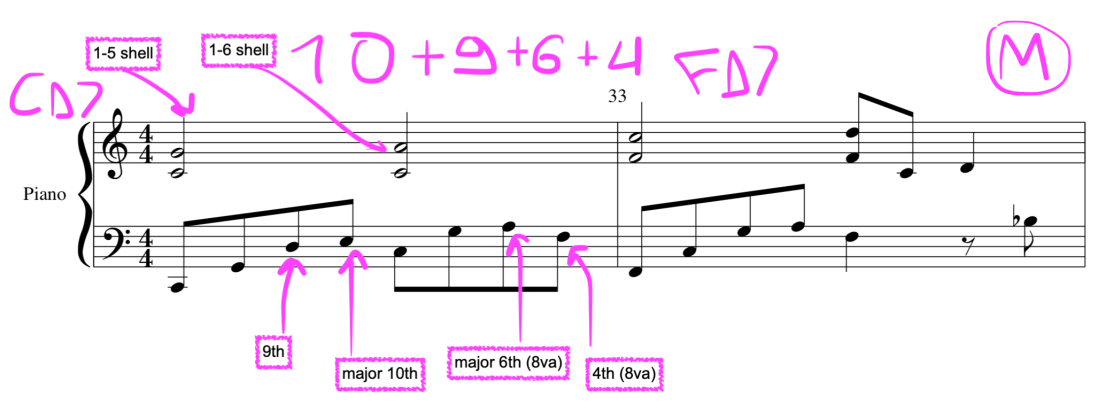
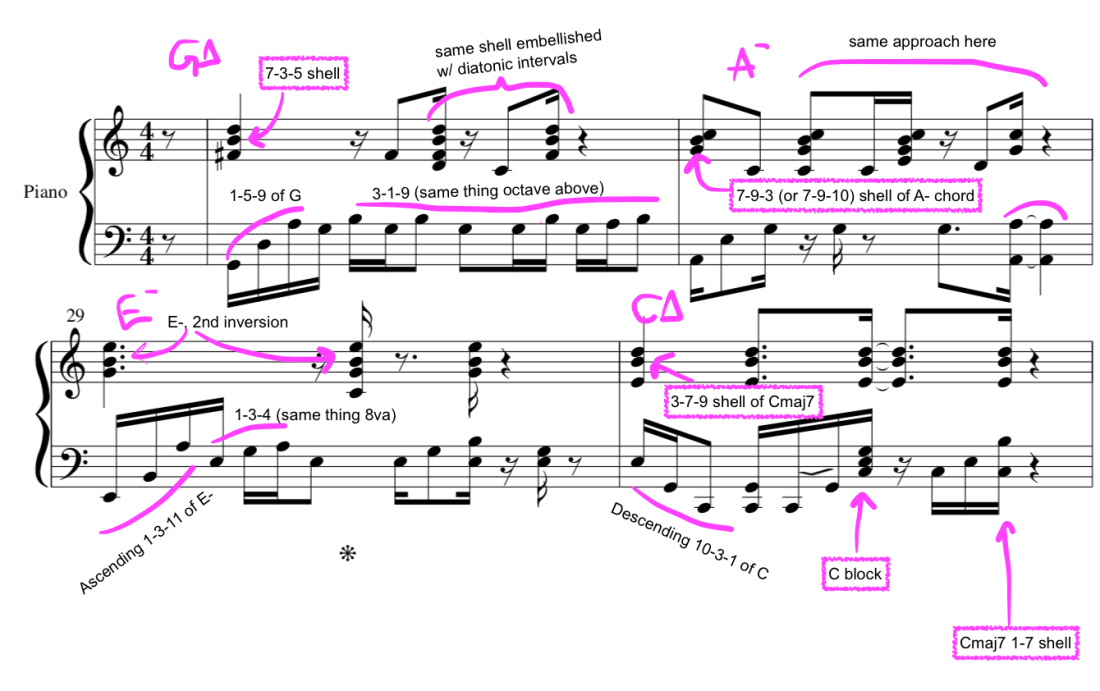
  • Then replace block chords with shell voicings and connect them using minimal movement principle and thus achieving sweet ass voice leading
  • Add broken 10ths in left hand
  • Break shells in right hand into arpeggios (or some semblance of)
  • Add other intervals and ascending / descending movements in left hand (1-5-10, 10-9-3-1, whatever)
  • Use diatonic passages in right hand instead of shells
  • Throw in super low bass in left hand in key moments
  • Combine everything
  • Perform it until it’s suddenly 4 AM

Here are some parts of this approach illustrated with an example of Katy Perry’s vintage banger Fireworks (first four bars):
Screenshot 2019-03-10 at 12.55.23

Here’s what it sounds like:


It’s barely recognisable, I know. Of course it is, because it’s a freaking interpretation! πŸ˜„

Practicing extensions & inversions without boring yourself to death

Today I wanted to share another approach to practicing such seemingly technical and tiresome stuff as chord inversions and extended intervals. I keep trying to make all my routine musical and as close to real life situation as I can. It may be useful to spend 5 hours throwing all inversions of all 7th chords in all keys in all modes around the circle of 5ths, but sometimes you just want your exercises to be a bit more musical. You know what I mean? So I did that.

Screenshot 2019-03-10 at 13.31.19.png


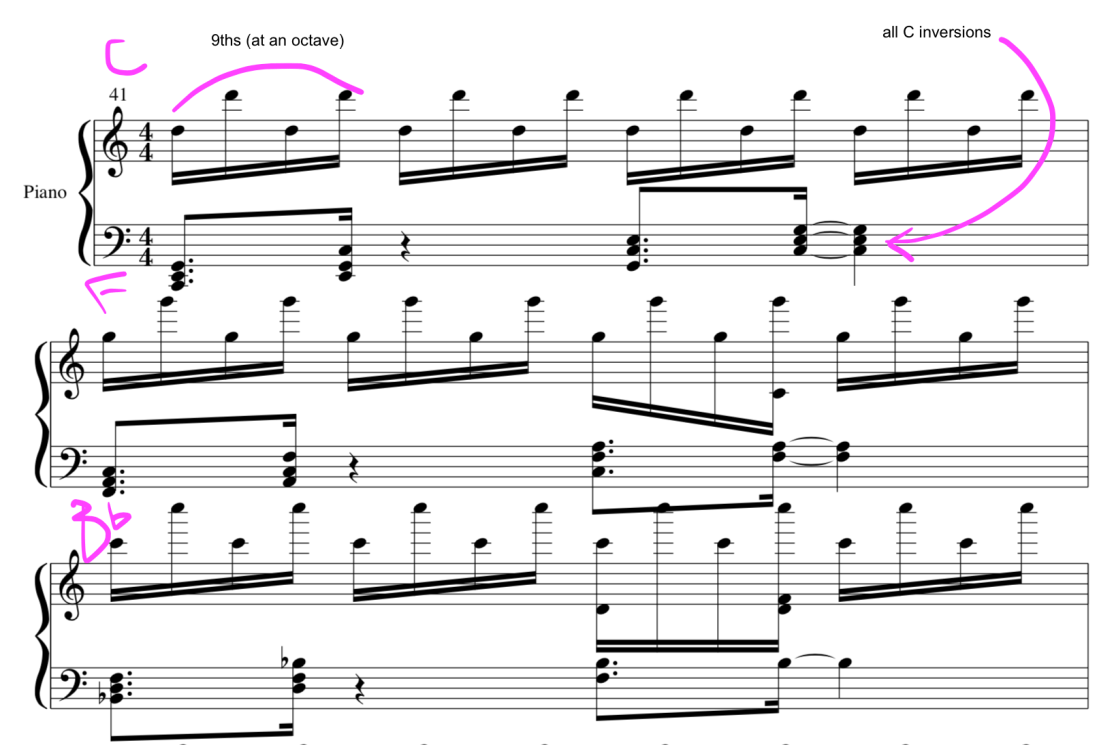
This is, in fact, a combination workout. Left hand plays all the inversions of a block chord, right hand plays diatonic interval or extension of choice (in this case major 7th) in two octaves. I’m still going around the good ol’ cycle of 4ths, but it sounds already like a piece and has much less of that endless ii β€” V β€” I feeling in it.

The beauty of it is that the moment you start getting bored, you can pick a different interval, just like that:

Screenshot 2019-03-10 at 13.07.40.png

…and Bob’s your uncle β€” now you’ve got completely different flavour as 9ths blend with inversions in the left hand.

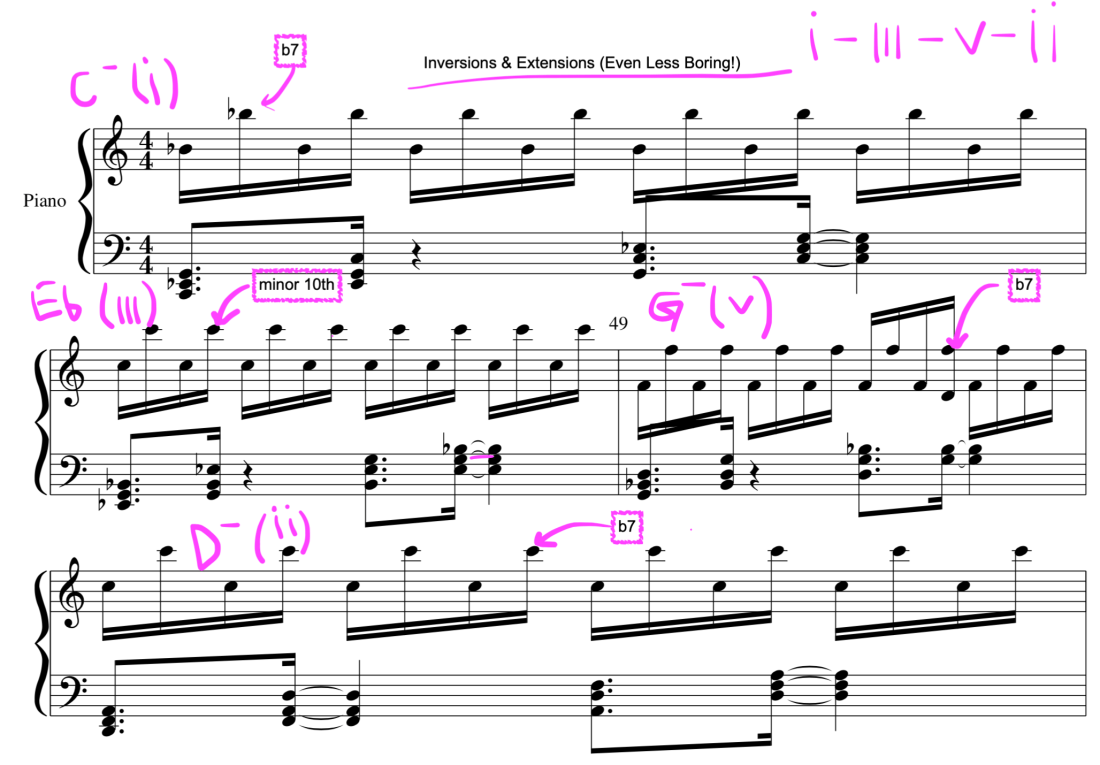
But the cycle of 4ths motion is still there, so it’s just a question of time before you will have had enough of it, right? πŸ˜„ That’s where modal progressions come in! And don’t forget that you can also alternate intervals in the right hand. Here I took C Dorian progression that sounded particularly nice to me: i β€” bIIIΒ β€” v β€” ii and applied the same technique while playing it. It sounds definitely like a piece, and in no way like a dull exercise.

Screenshot 2019-03-10 at 23.16.07

Obviously, then there’s Real Book and all the good stuff. You got itβ€”

The X-Files left hand workout

One more 10th-based routine for the left hand fluency that is not going to bore you to death as you take it around the cycle of fourths. Works the best in minor keys, it’s a combination of broken 1-5-10’s with minor 6ths and minor 7ths. No wonder it sounds a little bit disturbing. But in a pleasant way. I mean, controllably disturbing. Wait, what? Just share the sheet music, dudeβ€”

Screenshot 2019-03-07 at 08.57.17.png

Piano day (1h 40m)

Modal studies

  • Lydian DNA in 7th arpeggios
    • LH only
    • LH + alternating shells in RH (gave up pretty quickly, need to approach it slowly)
  • Harmonising Lydian scale in chord pairs around the cycle in growing gaps (Imaj7 β€” II7, Imaj7 β€” iii, Imaj7 β€” #IV, etc. β€” e. g. C β€” D, F β€” A-, Bb β€” EΓΈ, etc.) β€” extra cool exercise!

Arpeggios + combined LH & RH melodic studies

Screenshot 2019-03-04 at 08.26.15.png

This badass workout achieves three goals:

  • Improve LH technique by drilling the 2-octave arpeggios along with harmonic intervals
  • Think in chord tones and improve key fluency
  • Enjoy the non-boring exercise that actually sounds nice even though you’re still just playing a diatonic pattern around the cycle of goddam fourths

Improv

  • Major blues scale improv in all keys (recap)
    • LH: harmonic 5ths & 6ths
    • Broken 10ths + blocks

Just for the hell of it

  • All Lydian scales (similar & contrary motion)